Design and Construction of Fecal Sludge Treatment Plants (FSTP)
Engineering sustainable sanitation systems for safe sludge treatment and environmental protection
AIDE Private Limited delivers context-sensitive FSTP solutions that safely transform fecal sludge into treated effluent and reusable by-products, ensuring regulatory compliance and long-term service sustainability.
Product Overview
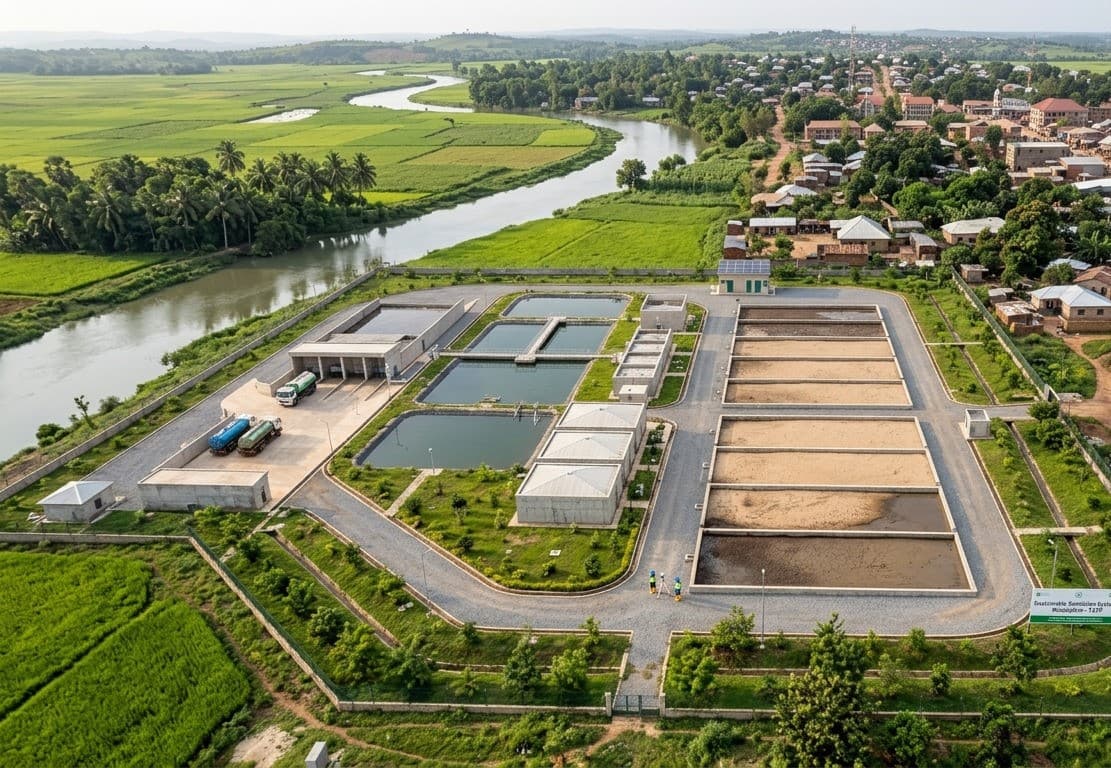
In many urban and peri-urban areas, fecal sludge is collected but not safely treated which leads to uncontrolled dumping into drains, land, and water bodies. This breaks the sanitation service chain and exposes communities to serious public health and environmental risks.
AIDE's Fecal Sludge Treatment Plants (FSTPs) address this critical gap by providing engineered systems that safely treat and stabilize sludge. These systems reduce pathogen loads, improve environmental quality, and enable safe disposal or reuse of treated outputs.
Beyond infrastructure, FSTPs play a vital role in strengthening citywide sanitation systems, ensuring that investments in containment and collection translate into real health and environmental outcomes.
How It Works
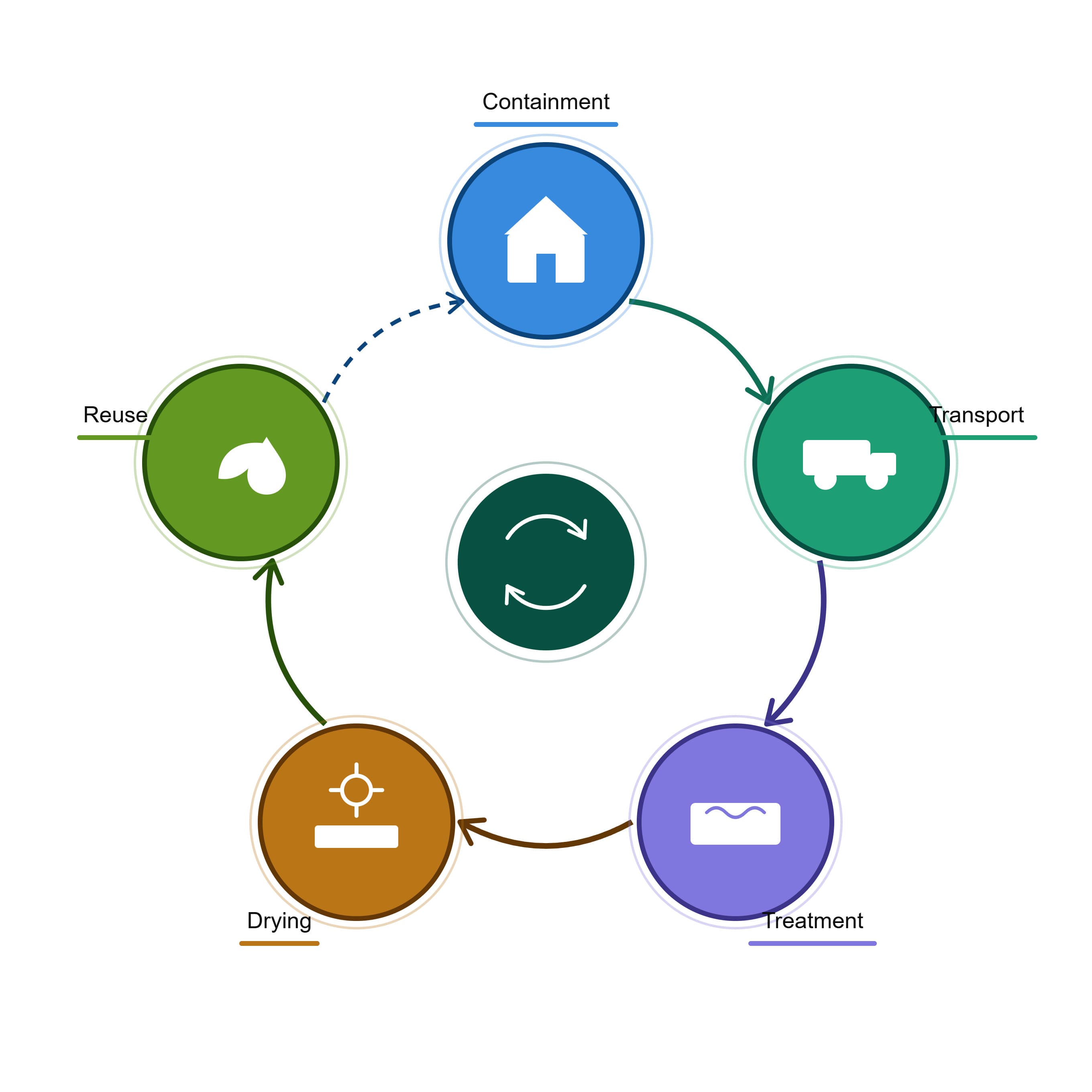
AIDE-designed FSTPs follow a structured treatment pathway aligned with the full sanitation service chain.
Containment & Collection
Sludge is collected from septic tanks and pit latrines
Transport
Safe conveyance to treatment facility
Pre-Treatment
Screening and settling to remove solids
Treatment
Biological and/or nature-based processes reduce pathogens and organic load
Drying & Stabilization
Sludge volume is reduced and stabilized
Reuse / Disposal
Safe discharge or reuse (e.g., compost, soil conditioner)
Technical Specifications
AIDE applies a rigorous, data-driven engineering approach to ensure optimal performance under local conditions.
| Technical Category | Design Parameter / Specification |
|---|---|
| Design Capacity | 10 – 400+ m³/day (Modular scalability)* |
| Input Sludge Quality | Characterized by TS, COD, and Pathogen Load |
| Hydraulic Retention Time | Optimized for anaerobic/aerobic digestion |
| Pathogen Reduction | 90% – 99.9% (Helminth egg & fecal coliform inactivation) |
| Volume Reduction | 50% – 80% (Via gravity thickening/solar drying) |
| Effluent Quality | Compliant with National Environmental Standards |
| Operational Lifespan | 15 – 25 years |
*subject to change based on client’s requirements
Environmental Impact
- Significant reduction in water and soil pollution
- Safe containment of pathogens and contaminants
- Enables resource recovery and reuse
- Supports climate-resilient sanitation systems
Key Features
- Modular and scalable system design
- Low operation and maintenance requirements
- Adaptable to local sludge characteristics
- Flexible integration with existing FSM systems
Ideal Applications & Use Cases
FSTPs are particularly effective in:
- Secondary cities and municipalities→ Where sewer networks are limited
- High-density urban settlements→ Requiring compact treatment solutions
- Climate-vulnerable regions→ Flood- or rainfall-prone areas
- Decentralized sanitation systems→ Where localized treatment is needed
- Emergency and transitional contexts→ Requiring rapid sanitation solutions
Implementation & Delivery
AIDE ensures high-quality delivery through its Joint Venture (JV) model, ensuring both engineering excellence and efficient implementation.
AIDE
Technical design, planning, quality assurance, and supervision
JV Partners
Certified contractors responsible for construction and execution
Client
Ownership and long-term operation
Why Partner with AIDE?
AIDE delivers more than infrastructure. We deliver complete sanitation solutions:
- System-based approach aligned with full FSM and CWIS frameworks
- Strong expertise in climate-resilient design
- Integration of engineering, environmental, and institutional planning
- Proven experience across WASH and environmental sectors