Raised Dual Platform No. 6 Hand Pump Tubewell
Ensuring safe drinking water access during floods and extreme climate events.
AIDE Private Limited designs and installs Raised Dual Platform No. 6 Hand Pump Tubewells to provide uninterrupted access to safe groundwater in flood-prone and climate-vulnerable regions. Engineered for resilience, this system ensures continuous water supply during floods, storm surges, and waterlogging conditions.
Product Overview & Mechanism
In flood-prone regions, conventional tubewells often become submerged, leading to contamination and loss of access. Our dual-access system ensures year-round safety.
1Normal Conditions (Dry Season)
- The handpump operates from the ground-level platform.
- The raised platform remains inactive.
- Gate valves control water flow through the standard pipeline.
2Flood Conditions (Emergency)
- The handpump is relocated to the raised platform.
- Ground-level pipe is sealed to prevent contamination.
- Elevated access ensures safe water above flood level.
Water Extraction Process
Groundwater enters through a perforated strainer
Sand trap prevents sediment entry
Water travels through blind/rising pipes
Pump mechanism extracts water manually
Technical Drawings & Specifications
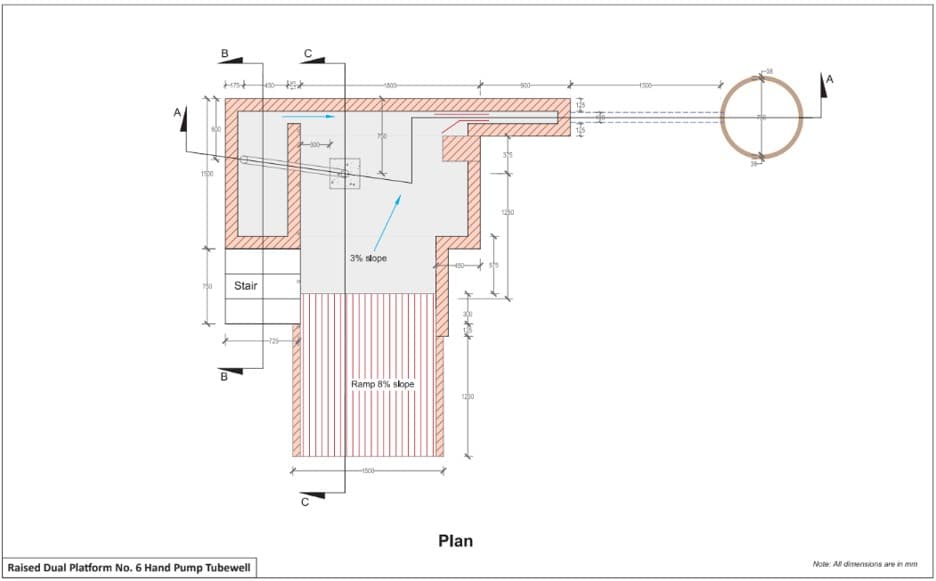
Plan View
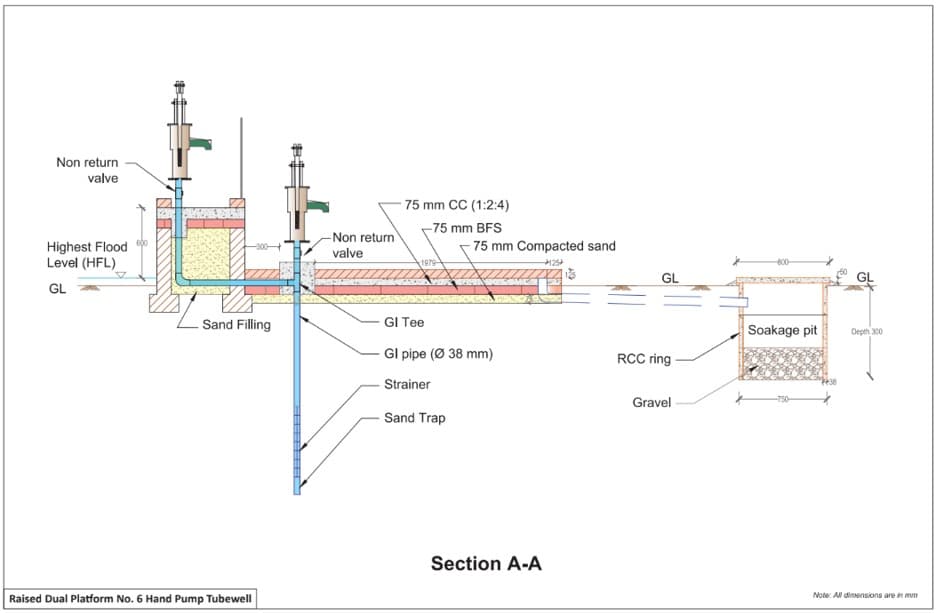
Section A-A
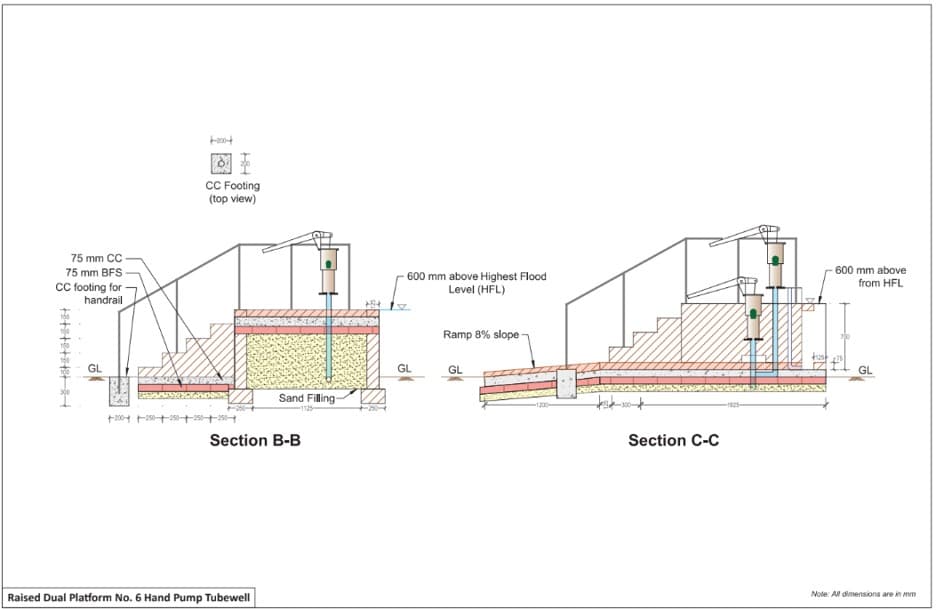
Section B-B & C-C
Detailed structural reinforcement profiles
Specifications
Robust engineering aligned with field conditions and groundwater characteristics.
Key Features
- Dual-platform design for year-round usability
- Flood-resilient elevated structure
- Controlled flow system using gate valves
- Durable material combination (GI + PVC)
- Inclusive design (handrails, ramps for elderly & disabled)
- Protection against contamination through sealing mechanisms
Environmental & Public Health
- Ensures access to safe drinking water during disasters
- Prevents contamination from floodwater intrusion
- Reduces waterborne disease risks
- Supports climate adaptation in vulnerable communities
- Promotes sustainable groundwater usage
Ideal Applications
- Flood-prone regionshaors, beels, chars, coastal zones
- Climate-vulnerable communitiesfrequent waterlogging areas
- Emergency response settingsdisaster recovery zones
- Rural and peri-urban settlementslacking resilient water systems
- Development projectsWASH and climate adaptation programs
Implementation & Delivery
AIDE Responsibilities
- • Site assessment and hydrogeological considerations
- • Technical design and specifications
- • Supervision and quality assurance
Construction & Installation
- • Skilled contractors execute installation
- • Strict adherence to sanitary and structural standards
Community Integration
- • Formation of local management committees
- • Training of caretakers (minimum 3, including women)
Operation & Maintenance
Routine Maintenance
- • Weekly cleaning of platform and drainage system
- • Inspection of nuts, bolts, and pump components
- • Immediate repair of leaks
Annual Maintenance
- • Full dismantling and reassembly
- • Structural and mechanical checks
Flood Rehabilitation Protocol
- • Mandatory purging of contaminated water (e.g., 100ft well → ~35L discharge, 600ft well → ~200L discharge)
- • Structural inspection for leaks and cracks
- • Shock chlorination (≈200 mg/L chlorine) if contamination persists
Key Risks Mitigated
Improper sealing, poor drainage, and substandard construction are eliminated through AIDE's strict adherence to standards.
Why Partner with AIDE?
AIDE delivers context-driven, resilient water infrastructure, combining strong expertise in climate-resilient WASH solutions with proven field-based implementation experience. We focus on long-term usability, sustainability, and the ability to link hardware with planning (e.g., CR-WSP insights).