Historical Discovery & Toxicological Scale
First detected in Chapainawabganj in 1993, Bangladesh's groundwater arsenic crisis was described by WHO as the largest mass poisoning of a population in history. Millions of shallow tubewells drilled in the 1970s and 80s inadvertently tapped arsenic-rich Holocene alluvial sediments.
Chronic ingestion causes hyperpigmentation, keratosis, peripheral vascular disease (Blackfoot disease), and elevated rates of bladder, lung, and skin cancers. Over 20 million people still drink water exceeding the Bangladesh standard of 50 µg/L.
Geochemical Release Mechanisms & Anaerobic Reduction
Arsenic enters groundwater naturally from Himalayas-derived sediments deposited in the Bengal Delta. The principal chemical mechanism releasing arsenic into water is the anaerobic reductive dissolution of iron oxyhydroxide (FeOOH) minerals driven by microbial degradation of organic matter.
This process converts insoluble arsenate [As(V)] into highly mobile and toxic arsenite [As(III)], which dissolves directly into shallow groundwater wells (<150m).
Deep Aquifer Protection & Hydrogeological Mapping
Deep aquifers below 150 to 300 meters depth consist of older Pleistocene sands capped by thick, clay aquitard layers. Geochemical analyses prove these deep aquifers remain arsenic-safe.
However, unguided deep drilling risks puncturing aquitard layers. AIDE utilizes geophysical gamma logging to ensure precise screen placement in pristine deep sand formations.
Membrane Desalination & Advanced Filtration
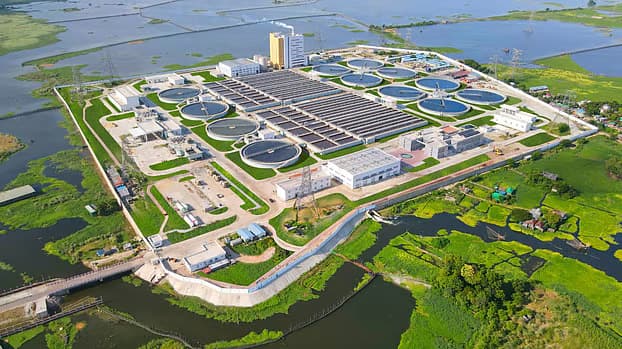
In areas where deep aquifers contain high iron or salinity, advanced membrane filtration offers guaranteed water safety:
Deploying AIDE Reverse Osmosis Systems achieves complete 99.5% removal of As(III) and As(V) heavy metal ions alongside iron and manganese.
Explore our turnkey water supply execution under AIDE Water Services.
National Policy Frameworks & Community Testing Programs
Sustaining arsenic mitigation requires routine well screening. AIDE supports DPHE field testing campaigns using digital arsenic field test kits, painting safe tubewells green and contaminated tubewells red.
Digital well mapping ensures local Union Parishad committees track safe drinking points across all wards.