Local Government Act & Institutional Mandates
Under Bangladesh's 2009 Local Government Act, Union Parishads (UPs) and Pourashava Municipalities hold statutory responsibility for local water point installation, drainage maintenance, and sanitation management.
However, technical capacity constraints at the Union level often hinder effective service delivery and asset maintenance.
Technical Gaps & Union Parishad Bottlenecks
Key institutional bottlenecks identified across rural Union Parishads include:
- Absence of Asset Inventories: Lack of digital registers detailing water point functionality and location.
- Limited O&M Budgets: Less than 2% of annual UP development funds allocated to routine repairs.
- Weak Technical Staffing: Lack of trained civil/environmental engineers at local Union levels.
AIDE's 5-Step Capacity Building Framework
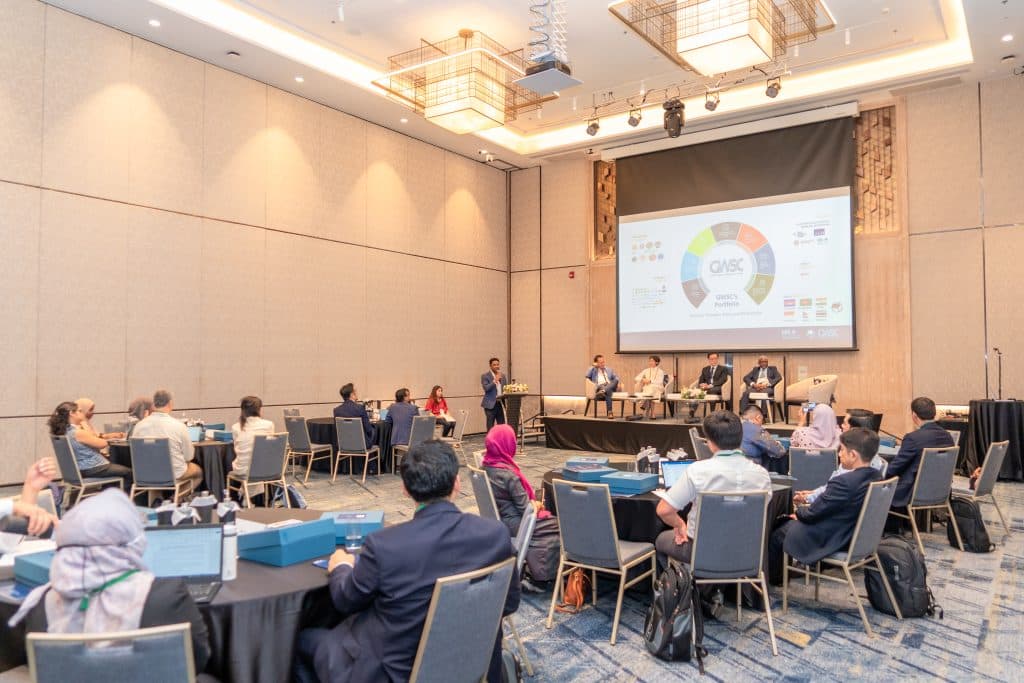
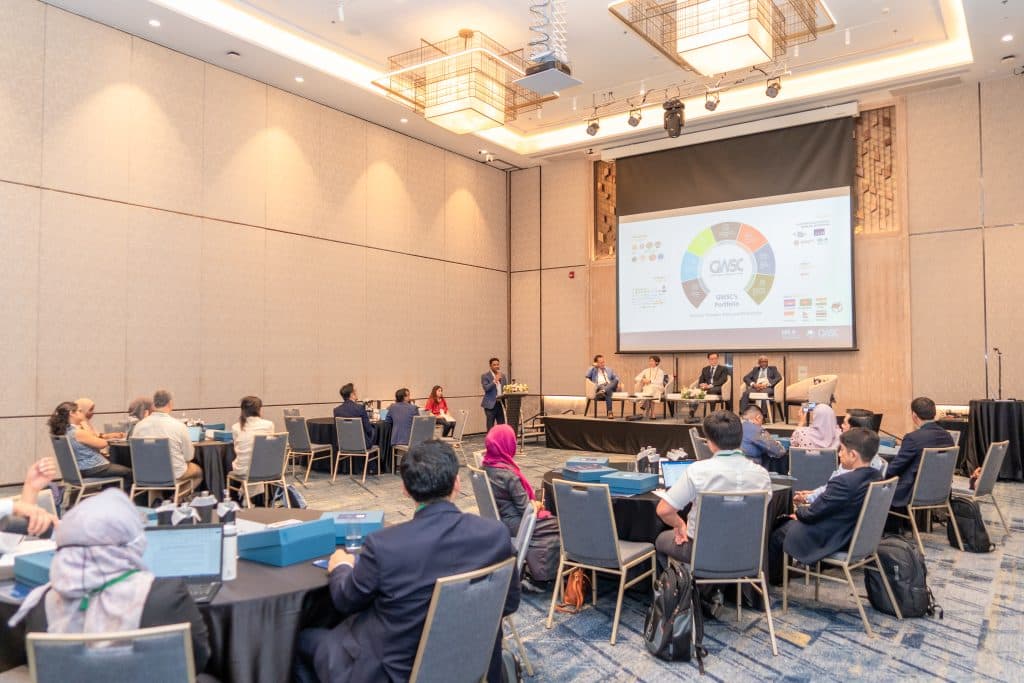
In partnership with UNICEF and DPHE across WASH Capacity Development Phase 1 & Phase 2, AIDE trained 465+ sub-assistant engineers and UP representatives across 46 districts through a 5-step framework:
- 1. Baseline Capacity Audits: Evaluating UP technical infrastructure and budget allocation mechanisms.
- 2. Technical Engineering Training: Training local engineers on climate-resilient water safety planning (WSP) and DRR.
- 3. Digital MIS Asset Mapping: Equipping UP staff with mobile GIS tools to track water point functionality in real-time.
- 4. Inclusive WASH Budgeting: Training UP finance committees to allocate 10%+ of annual development funds to WASH.
- 5. Post-Training Mentorship: Providing field supervision and verification.
Mobile GIS Asset Mapping & Real-Time Monitoring
Transitioning from paper registers to mobile GIS mapping enables Union Parishads to log water point coordinates, water quality data, and repair history directly onto cloud dashboards.
When a hand pump breaks, caretaker alerts automatically notify UP engineers for rapid component replacement within 48 hours.
Inclusive Budgeting & UNICEF-DPHE Sector Scaling
By formalizing WASH standing committees and allocating ring-fenced budgets, local governments maintain asset autonomy long after international project funding completes.
AIDE continues scaling capacity building frameworks nationwide alongside DPHE and UNICEF.